Answering your search for reliable fuel flow sensors on NMEA 2000 networks, these picks help boaters track fuel usage, detect anomalies, and optimize consumption. Best for boat owners who want precise fuel data and seamless NMEA 2000 integration. The top choices balance sensor accuracy, ease of installation, and compatibility with common marine electronics. A quick summary table follows to compare core details at a glance.
| Product | Brand | Key Benefit | Best For |
|---|---|---|---|
| Garmin GFS 10 Fuel Sensor | Garmin | Clear data on fuel flow with Garmin ecosystem | Owners using Garmin displays |
| Lowrance Fluid Level Sensor, Fuel Pack-0 | Lowrance | Fuel level integration with basic flow awareness | Lowrance users needing level + flow basics |
| Fuel Flow Sensor PK | Lowrance | Dedicated flow sensing with T-connector | LMF/HDS setups needing flow data |
| Maretron Fuel Flow Monitor, FFM100-01 | Maretron | Advanced flow monitoring with true temperature compensation | Professional or serious data logging |
| Lowrance Fuel Flow Sensor w/10′ Cable & T-Connector | Lowrance | Compact, easy wiring with standard cable | Simple installations needing 10 ft cabling |
Garmin GFS 10 Fuel Sensor
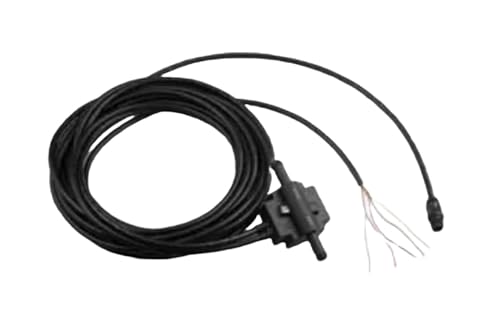
The Garmin GFS 10 Fuel Sensor is designed to integrate with compatible marine displays to provide fuel flow data. Features include a model reference (Mfg Part 010-00671-00) and a compact package with included manual. Best for boaters already using Garmin electronics who want a straightforward sensor‑to‑display link. Consider potential installation considerations on older fuel lines and ensure compatibility with existing NMEA 2000 networks.
Lowrance Fluid Level Sensor, Fuel Pack-0

This product provides fuel level sensing with a Fuel Pack-0 configuration. It is best for boaters wanting a combined approach to monitor fuel levels and basic flow awareness within a Lowrance ecosystem. Best for users who prioritize level data alongside flow signals, though it may not offer the full flow sensor precision of dedicated flow models.
Fuel Flow Sensor PK

The Fuel Flow Sensor PK from Lowrance is a dedicated flow sensor with a 10 ft cable and a T-connector. It supports compatibility with LMf-200, LMF-400, and HDS units, and is designed for straightforward integration where flow measurement is the primary goal. Choose this if you want a focused flow sensor that pairs with compatible Lowrance systems; ready for installation in common marine plumbing layouts. Limitations may include required matching connectors and space for mounting near the engine bay.
Maretron Fuel Flow Monitor, FFM100-01

The Maretron FFM100-01 is a fuel flow monitor designed to optimize consumption with advanced features. It uses true temperature compensation via built‑in thermistors for improved accuracy and can detect reverse flow due to pressure fluctuations. Best for users seeking high‑level monitoring with robust data processing; outcomes include potential fuel cost reductions. A limitation is that Maretron ecosystems may require more comprehensive network configuration and expertise.
Lowrance Fuel Flow Sensor w/10′ Cable & T-Connector

This Lowrance offering provides a fuel flow sensor with a 10‑foot cable and T‑connector, designed for easy installation. Best for installations where a shorter or predefined cable run is acceptable and where integration with compatible Lowrance devices is desired. Be mindful of cable routing and connector matching with your existing setup.
Buying Guide
What should I look for in a fuel flow sensor for NMEA 2000?
Key factors include NMEA 2000 compatibility, flow measurement accuracy, installation ease, available cable length, and how the sensor integrates with your existing marine electronics. Consider whether you primarily need flow data, or if you also want level sensing for a fuller fuel management view.
Which sensor is best for a Garmin ecosystem?
Garmin GFS 10 integrates smoothly with Garmin displays and data formats, making it a strong choice for Garmin‑centric helm setups seeking direct data presentation without extensive interfacing work.
Which option is best for Lowrance users?
Lowrance flow sensors (PK and the 10′ Cable variant) are designed to pair well with LMf‑series and HDS units. They provide straightforward installation and consistent data within a Lowrance network.
When is a Maretron system worth it?
Maretron’s FFM100‑01 targets professional or heavy‑duty monitoring, offering advanced temperature compensation and reverse‑flow detection. It is best when precise, mission‑critical fuel data is required across a larger NMEA 2000 network.
Should I prioritize flow only or combine with fuel level sensors?
If you want a broader picture of fuel management, combining a dedicated flow sensor with a level sensor (as available in some Lowrance packages) can help detect anomalies like leaks or unexpected consumption spikes. Ensure your data streams are harmonized within your chosen display system.
How important is installation flexibility?
Cable length, mounting options, and routing constraints affect long‑term reliability. Look for sensors with adequate cabling and components (like T‑connectors) that fit your vessel’s layout without excessive modification.
FAQ
- What does a fuel flow sensor measure? It measures the rate of fuel moving through the system, helping track consumption and detect inefficiencies.
- Do I need NMEA 2000 to use these sensors? Yes, all listed options are designed for NMEA 2000 networks or compatible marine displays.
- Can I install these myself? Installation difficulty varies; basic units are doable with standard tools, while advanced monitors may benefit from professional installation.
- Will these sensors work with multiple displays? Many readouts are compatible with multiple NMEA 2000 devices, but check your display compatibility and data formatting.
- Is temperature compensation important? Temperature compensation improves accuracy, especially in varying engine temperatures or ambient conditions, making it a beneficial feature in higher‑end models.