Answering the question “which boat davits for docks should I buy?” this guide highlights strong, corrosion-resistant options and clear buyer picks. Designed for waterfront users, this selection covers heavy-duty dock davits, versatile pulleys, and secure mooring hardware. Each product is evaluated for who benefits most, plus practical pros and a single limitation to consider. Whether you’re lifting crab pots, engines, or small boats, these picks balance capacity, durability, and installation ease for American waterfronts.
Buyer summary table (selected products):
- FEIMIRE Crab Pot Puller System (Davit Kit) — Heavy-duty 800 lb, marine-grade stainless steel, easy installation
- Marine & Dock Davit Crane — 3,000 lb capacity, 5,000 lb winch, 360° swivel for flexible loading
- FEIMIRE Crab Pot Puller System (Pulley Block) — Open block design for quick rope handling
- FEIMIRE Crab Pot Puller System (Davit & Pulley Block Combo) — Integrated set for crab pots and heavy gear
- RiaYer 6 Inch Boat Dock Cleats (2-Pack) — 316 marine-grade stainless steel, complete hardware
FEIMIRE 800 Lb Davit Kit For Crab Pots
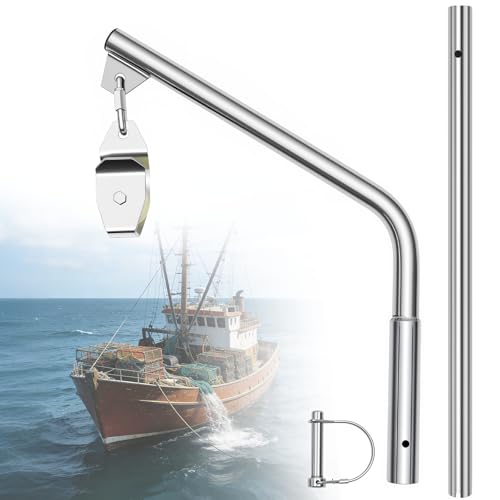
Best for: Dockside users lifting crab pots, traps, and lightweight gear with manageable weight. This kit uses Schedule 40 304 stainless steel tubing to achieve 800 lb capacity, providing high strength without excessive bulk. It includes mounting hardware and a 7-inch pulley block for smooth lifting. The design minimizes deck clutter and supports quick retrieval during busy crabbing operations. A caution: ensure the mounting surface and brackets are suitable for the weight and operating conditions. Compatibility with other davit accessories is favorable but verify fitment before mixing brands.
Marine & Dock Davit Crane With 360° Swivel

Best for: Pros or crews needing a versatile, high-capacity lifting solution for engines, large gear, or crane-style operations on docks or trucks. This 3,000 lb capacity unit with a 5,000 lb winch supports heavy loads and features a 360° swivel for precise, easy loading. The telescopic boom extends in three positions and folds when not in use to keep walkways clear. A limitation: bulky footprint may require more space and a solid mounting base to maintain stability under load.
FEIMIRE Pulley Block Davit System

Best for: Users seeking an open block design for quick rope insertion and reliable lift of crab pots or small mooring tasks. This kit emphasizes premium hardware and a 7-inch open-face pulley block for low-friction movement. It’s ideal where simple maintenance and straightforward operation are priorities. A limitation: the open block is best suited for standard rope diameters—check compatibility with your line to avoid wear or binding.
FEIMIRE Davit & Pulley Block Combo
Best for: Waterfront setups needing an integrated system that combines davit and pulley for efficient retrieval of crab pots, traps, and heavy gear. The combo design focuses on corrosion resistance in marine environments and a reinforced structure for heavy use. This option aims to improve crabbing efficiency by providing a complete, ready-to-use package. A caution: verify that the combined weight and reach fit your dock’s layout and water depth to prevent overreach or collision with nearby equipment.
RiaYer 6 Inch Dock Cleats, 2-Pack

Best for: Dock mooring hardware that prioritizes corrosion resistance and a clean, modern look. These 316 marine-grade stainless steel cleats come as a 2-pack with hardware, offering a robust attachment for boats, kayaks, or small craft. They feature an open base for durability and a black or polished finish depending on model. A limitation: paired hardware adds installation time and requires compatible screws and backing for secure mounting in saltwater environments.
Buying Guide: How To Choose Boat Davits For Docks
What load will you lift? Choose a davit with a capacity comfortably above your heaviest item, factoring dynamic loads and potential wave action. For crab pots and small boats, look for corrosion-resistant stainless steel and proven pulling mechanisms. If you lift engines or heavier gear, prioritize hydraulic or electric winches and a swivel that matches your space constraints.
What space do you have? Consider the dock footprint, reach over water, and the ability to fold or retract when not in use. A 360° swivel helps with precise loading, while telescoping booms save space on tight piers. Ensure there is a solid mounting base and that the structure can bear the design load and vibration.
How easy is installation and maintenance? Simpler systems with modular components reduce labor and downtime. Open-block pulley designs speed rope changes. Stainless steel hardware reduces corrosion risk but inspect fittings regularly for wear, especially in saltwater environments.
What accessories improve efficiency? Look for complete hardware packages, mounting brackets, and included nuts, bolts, and washers. A pulleys-and-davit combo can simplify setup and offer better control during retrieval. For frequent mooring tasks, robust cleats with corrosion resistance ensure long service life and lower maintenance.
FAQ
- What is a davit, in simple terms?
A davit is a small crane system used to lift and lower loads, often for boats, gear, or crab pots, from a dock or shore. - What capacity should I choose for boat davits?
Pick a capacity higher than your heaviest load, including a safety margin for dynamic dock conditions. - Do I need electric winches with a davit?
Electric winches add lifting power and convenience for heavy items, but manual systems can be sufficient for lighter loads. - Are 316 marine-grade cleats better than other finishes?
Yes, 316 stainless steel offers superior corrosion resistance in saltwater environments, extending life when exposed to marine elements. - Can I install a davit on any dock?
Installation depends on dock construction, mounting surface integrity, and weight distribution. Check structural compatibility before installation. - What maintenance is required for davits?
Regularly inspect hardware, lubrication points, and fasteners. Clean and protect moving parts from salt and moisture to prevent corrosion.