Choosing the best fire extinguisher for boats is vital to protect against common marine fire hazards such as flammable liquids, electrical fires, and onboard chemicals. In this guide, we review top-rated fire extinguishers designed specifically for boating environments, highlighting their capabilities and certifications. Whether you need a compact model or a powerful marine-grade extinguisher, these selections cover multiple classes of fires relevant to boats.
| Product | Brand | Fire Classes | Key Features |
|---|---|---|---|
| Kidde Fire Extinguisher for Boats, Single-Use 5BC | Kidde | Class B, C | Corrosion resistant, all-metal construction, combats flammable liquids and electrical fires |
| First Alert Marine Fire Extinguisher, FE1A10GR | First Alert | Class A, B, C | UL rated, multipurpose, rechargeable, commercial-grade metal valve |
| First Alert Personal Watercraft Fire Extinguisher, FE5R-PWCNA | First Alert | Class B, C | USCG Size I compliant, dry chemical agent, certified to ANSI/UL standards |
| AmzBoom Fire Extinguisher 3-Pack, Portable Aerosol Spray | AmzBoom | Class A, B, C, K | Easy activation, residue-free, eco-friendly, includes mounting brackets |
| Kidde Fire Extinguisher for Vehicles, Single-Use 10BC | Kidde | Class B, C | All metal construction, quick discharge, impact resistant |
Kidde Fire Extinguisher for Boats, Single-Use 5BC

This Kidde fire extinguisher is designed specifically for marine environments, recognized for combating basic onboard fires involving flammable liquids (Class B) and electrical equipment (Class C). Its standout feature is a 12 times higher corrosion resistance thanks to durable aluminum and stainless-steel components, making it ideal for harsh saltwater conditions. The all-metal valve assembly and lever are rust and impact-resistant, ensuring reliability during emergency use. Easy-to-pull safety pin adds to its user-friendly design, making this extinguisher a solid choice for boat owners seeking durable fire protection.
First Alert Marine Fire Extinguisher, FE1A10GR
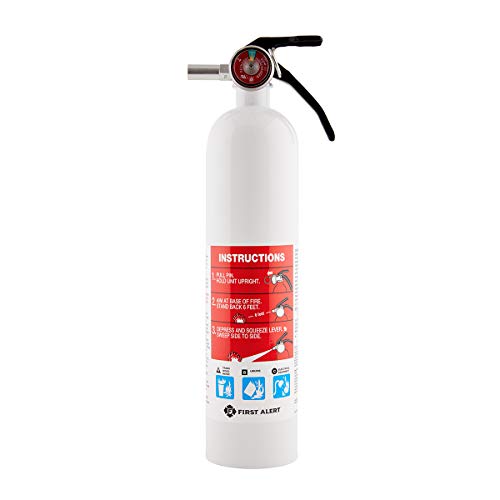
The First Alert Marine1 Fire Extinguisher features a UL rating of 1-A:10-B:C, meaning it can effectively address fires involving wood, paper, plastics, gasoline, oil, and electrical equipment. Its all-metal construction includes a commercial-grade metal valve and trigger for dependable operation. The extinguisher uses a monoammonium phosphate extinguishing agent, making it a multipurpose option suitable for a variety of fire classes common on boats. Additionally, it’s rechargeable by professionals after use, promoting long-term value for repeated safety assurance on watercraft.
First Alert Personal Watercraft Fire Extinguisher, FE5R-PWCNA

Specifically made for marine use, this First Alert fire extinguisher satisfies U.S. Coast Guard Size I requirements, ensuring compliance with safety regulations. It’s tested and certified to meet ANSI/UL711 and CAN/ULC-S508 standards, providing reliable fire suppression. Equipped with a dry chemical extinguishing agent (sodium bicarbonate), it targets flammable liquid and electrical fires effectively. This compact extinguisher is perfectly suited for personal watercraft but also versatile for boats, addressing key marine fire hazards safely.
AmzBoom Portable Fire Extinguisher 3-Pack Aerosol Spray

The AmzBoom fire extinguisher pack offers portability and ease of use with a simple “press, aim, and spray” formula. Ideal for boats, vehicles, kitchens, and homes, it manages Class A, B, C, and K fires, including grease and lithium-ion battery fires. The advanced formula forms a protective layer to prevent reignition, enhancing safety. Made from non-toxic, eco-friendly water-based ingredients, it leaves no residue, making cleanup easy—an important feature in confined boat spaces with children or pets aboard. The pack includes mounting brackets for quick access in emergencies.
Kidde Fire Extinguisher for Vehicles, Single-Use 10BC

This Kidde fire extinguisher is primarily designed for vehicles but equally effective for boats needing protection from flammable liquids (Class B) and electrical fires (Class C). Featuring an all-metal construction including a durable valve assembly and impact-resistant handle, it offers robust durability. The discharge time ranges from 8 to 12 seconds with a reach of 6 to 8 feet, providing sufficient coverage for most marine fire emergencies. Its operator-friendly design incorporates an easy pull safety pin, essential for rapid deployment during fire incidents.
Buying Guide: What to Consider When Choosing a Fire Extinguisher for Your Boat
Selecting an appropriate fire extinguisher for your boat requires careful consideration of various factors to maximize safety in marine environments.
Fire Class Ratings
Boats commonly face Class A (ordinary combustibles), Class B (flammable liquids/gases), and Class C (electrical fires). Ensure the extinguisher covers at least Class B and C for marine use. Multipurpose extinguishers covering A, B, and C classes provide broader protection.
Marine Certifications and Compliance
Look for models that meet U.S. Coast Guard (USCG) requirements or ANSI/UL certifications, which guarantee tested effectiveness and safety standards compliance relevant to boating applications.
Material Durability and Corrosion Resistance
Saltwater environments demand corrosion-resistant materials such as aluminum or stainless steel for longevity. All-metal constructions with protective coatings help withstand marine conditions.
Size and Capacity
The size should align with USCG Size I or II recommendations depending on your boat size and engine type. Portable, lightweight units ensure easy deployment, while larger capacity extinguishers offer longer discharge times for severe fires.
Ease of Use and Installation
Quick and intuitive activation mechanisms reduce panic during emergencies. Mounting brackets for secure, accessible placement onboard are highly recommended. Safety pins and trigger designs should facilitate rapid and safe operation.
Extinguishing Agent Type
Dry chemical agents such as monoammonium phosphate or sodium bicarbonate are common for marine extinguishers due to their effectiveness on flammable liquids and electrical fires. Water-based or aerosol sprays are also popular for their residue-free cleanup and eco-friendliness.
Rechargeability and Maintenance
Rechargeable extinguishers require professional servicing after use, providing long-term value. Single-use models should be replaced after discharge. Regular inspections of pressure gauges and seals are critical for readiness.
By evaluating these aspects, boat owners can select a fire extinguisher optimized for their vessel’s needs, ensuring enhanced safety on the water.